

Can A Cellphone Be Repaired After Being In Xray Room?
Paradigm Wisely is a joint initiative of the American College of Radiology, Radiological Society of North America, American Society of Radiological Technologists and American Association of Physicists in Medicine.

How to Understand and Communicate Radiation Risk
Donald J. Peck, PhD, Henry Ford Wellness System, Detroit, MI
Ehsan Samei, PhD, Duke University Medical Center, Durham, NC
Updated March 2017 | Download PDF

Many medical imaging examinations involve exposure to ionizing radiation. The exposure amount in these exams is very pocket-sized, to the extent that the health adventure associated with such low levels of exposure is frequently debated in scientific meetings. Nonetheless, the prevailing scientific view is that there is a finite (though minor) amount of risk involved with such exposures. The risk is increased with the amount of exposure, repeated exposures, and when the patient is young. This fabric aims to provide a brief overview of the run a risk associated with medical imaging examinations that involve ionizing radiation.
A. Radiations Biology Review
Ionizing radiation can cause tissue impairment. Tissue damage occurs through the change in chemical properties of molecules in the tissue following exposure to radiations. The major contributor to damage from radiation is through radiation changing a water molecule into a new form chosen a "free radical". Gratis radicals are chemically highly agile and as such can have reactions with genetic molecules of the cell (i.east., the DNA). This tin cause impairment to the Deoxyribonucleic acid well-nigh of which is readily repaired by the prison cell. If it is non, it tin can result in cell decease. Alternatively, if the DNA impairment is repaired erroneously, information technology tin can result in an amending of the genetic encoding leading to hereditary changes or cancer induction.
Changes that result in cell death are termed "Deterministic Effects"; while changes to the Deoxyribonucleic acid encoding that lead to other agin changes are termed "Stochastic Effects" (see Figure one).
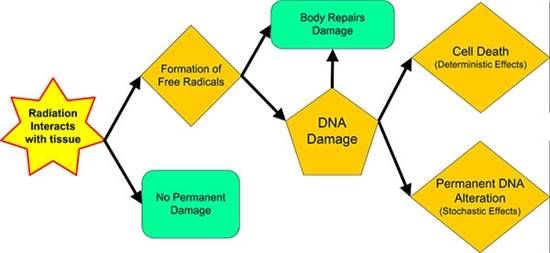
Effigy 1. Radiation – Deterministic and Stochastic Effects
A.1. Deterministic Effects (Cell Death)
Cells are dying all of the fourth dimension in the body from physical, chemical and other causes (i.e. "natural causes"). In nearly cases these cells are replaced or the body adapts to part normally when this occurs. Merely if also many cells die, the damage caused may not be compensated for very hands. Whether the organ can go on to function depends on how much of the organ is damaged and the number of cells inside the organ that are damaged. This is due to the structure of tissues and organs into functional subunits (FSU). A FSU is a fix of tissues or organs whose ultimate function is dependent on the overall workings of each subunit, e.m. proper digestion of food requires the entire digestive tract to office properly – stomach, intestines, etc. But when the tissue or organ has parallel functional construction, rather than in serial similar the digestive tract, damage from whatsoever source can be compensated for more easily and normal part can be maintained. Therefore, whole organ irradiation or irradiation of an entire FSU reduces or eliminates the ability of a tissue or organ to be repaired. Yet if some function of the FSU is left unexposed, fractional part can continue and repair of the damage may exist possible.
Deterministic effects can be thought of as furnishings in which the consequence can be determined, i.eastward. they are anticipated. Deterministic effects volition occur if the radiation deposits enough energy in tissue to disrupt the tissue'due south FSU enough. The amount of energy required to cause these changes is different for different tissues and this amount of radiations is called the threshold dose for tissue harm.
Deterministic effects are unremarkably divided into tissue specific/local changes and whole torso furnishings. Examples of tissues that are known to demonstrate deterministic effects from radiation exposure are:
- Tissue specific damage from radiation
- Lens of the eye
- Detectable opacities
- Cataract formation
- Skin
- Peel reddening (erythema)
- Hair loss (depilation)
- Skin cell expiry with scarring (necrosis)
- Reproductive organs
- Infertility
- Lens of the eye
- Whole torso radiations damage (just occurs in extremely high radiation exposures beyond those produced by whatsoever diagnostic imaging system)
- Bone marrow damage/reduction of claret cell production
- Gastrointestinal mucosa lining loss
- Key nervous system tissue harm
The corporeality of radiations required to produce these deterministic furnishings has been derived from studies in experimental prison cell cultures, fauna studies, as well as human epidemiology studies. From these studies, the dose thresholds have been established where the upshot is observed in 1% of a population (see Table i). This ways, these values are the amount of radiation energy absorbed by the tissue where if 100 people were exposed to this level of radiations, only a single individual would feel this upshot. The unit used for absorbed radiations dose in Table 1 is the Gray (Gy). This value is the standard international measure for absorbed radiation free energy. We volition see later that this unit of measurement must be converted to another unit to empathize the stochastic effects (i.e., genetic and cancer effects) of radiation.
Table 1: Dose Threshold for Deterministic Effects* | ||
| Tissue | Full acute dose threshold (Gy) | Time to develop effect |
| Lens of Eye | ||
| Detectable opacities | 0.five–2 | > ane twelvemonth |
| Cataract germination | v.0 | > i twelvemonth |
| Pare | ||
| Skin reddening | 3–6 | 1–4 weeks |
| Temporary pilus loss | 4 | 2-3 weeks |
| Skin death and scarring | 5-10 | 1-four weeks |
| Testes | ||
| Temporary sterility | 0.15 | three-9 weeks |
| Permanent sterility | three.5–6 | iii weeks |
| Ovaries | ||
| Permanent sterility | 2.5–6 | < 1 calendar week |
| Gastrointestinal | ||
| Mucosa lining loss | 6 | half-dozen-9 days |
| Bone Marrow | ||
| Reduction of blood cell production | 0.5 | ane-two months |
| * ane% incidence level based on ICRP publication 103 (2007) | ||
Reviews of biological and clinical studies have shown that beneath 0.1 Gy no deterministic effects from radiation exposure have been proven. This is primarily due to the fact that cellular repair mechanisms occur continuously and this prevents deterministic effects at low radiations exposure levels.
The furnishings from radiations exposures at 10-ray energies do not occur during or immediately after the exposure to radiation. This is shown in the column labeled "Fourth dimension to develop consequence" in Table 1. Different the exposure to the dominicus that causes pare reddening within hours of the exposure the effects from these high-absorbed radiation doses crave weeks to years post-obit the exposure to produce the effects listed. Therefore, the upshot will not exist seen at the time of exposure and when the consequence does occur the correlation to the radiations exposure may not be easily determined.
A.2. Stochastic Effects (Genetic Changes and Cancer)
Stochastic furnishings are random or probabilistic in nature. Past beingness random, the occurrence of individual events cannot be predicted. Stochastic effects tin be divided into two groups, genetic and carcinogenic effects. Based on the random nature of these effects, the production of genetic changes or induction of cancer in an individual cannot be determined for certain regardless of the amount of energy captivated; just the probability or the likelihood tin exist ascertained. As such, there isn't a threshold dose above which these effects will definitely occur. Conversely, at that place isn't a threshold dose beneath which the likelihood of these furnishings could be zero.
Genetic Changes
The exposure to radiations can cause damage in germ cells that ultimately outcome in mutations in the exposed person'southward fetus if she is pregnant. But such mutations are not radiation-specific; the radiation only produces DNA sequencing errors that might take occurred naturally. Therefore, instead of producing unique mutations, damage from radiation exposure just results in a college frequency of normal/spontaneous mutations. This means radiation does not crusade the production of monsters as seen in the movies. In add-on, a large number of creature and human studies have shown that the adverse effects from radiation exposure are negligible in subsequent generations.
Specifically, at that place is no direct evidence at whatsoever radiation dose that exposure of parents leads to excess genetic disease in their offspring. Therefore, radiation exposure tin cause mutations in children if the reproductive cells of the parent are exposed, but the child does not carry whatsoever adverse genetic trait produced by the radiation exposure that tin be passed on to their offspring. Given these facts, information technology is very of import to inform your md and the person performing the x-ray study if you are or may be significant. Equally we volition talk over later the exposure of a fetus to radiations is a major business concern for radiation effects that may occur in a kid if the child is exposed before birth.
Cancer Induction
Cancer induction is arguably the most important and the almost feared radiation effect. From the discovery of ionizing radiation at that place has been documented show of radiation induced cancer in animal and human studies. The initial homo experiences were all at high radiation dose levels from people working with radiation or using radiation without the knowledge of its potential harm. In addition, long-term follow-upward studies of the Japanese survivors of the atomic bomb attacks on Hiroshima and Nagasaki and the early medical usage of radiation in treatment and diagnostic studies have shown increased cancer incidence in the exposed populations.
All radiation effects have a latency period betwixt the time of exposure and the onset of the effect, as seen with deterministic effects in Table 1. For cancer induction, the latency period is on the social club of years, with leukemia having the shortest latency menstruum (5 to 15 years) and solid tumors having the longest latency period (x to threescore years). Therefore, information technology is very difficult to prove that a cancer is straight related to earlier radiations exposure, because other factors encountered during the latency menses may exist the actual crusade of the cancer. This is particularly true when the exposures are at low radiation levels such every bit those received in diagnostic radiology and cardiology studies.
Currently, at depression radiation exposure levels no written report has been comprehensive enough to demonstrate stochastic effects conclusively. Just as stated above, at very high radiation exposure levels there is good data that proves the induction of cancer from the exposure. So the estimation of gamble for cancer induction at low radiation exposure must be extrapolated from the high exposure level data. This is where nearly of the controversy concerning radiation effects exists. The most conservative estimation of risk from radiations exposure assumes the furnishings from low radiation exposure are a simple scaled version of the high exposure results (i.e. a linear or straight-line) extrapolation from the high- to the low-exposure results). Nigh groups that monitor and clarify radiation exposures use this linear extrapolation model to gauge cancer induction from radiations.
Risk Models
Currently there are two models used to assess run a risk of stochastic effects from radiation exposure; these are the accented and relative risk models.
Accented risk is defined as the probability that a person who is disease free at a specific age will develop the disease at a later time following exposure to a risk gene, e.g. the probability of cancer consecration following exposure to radiation.
The age-adjusted cancer incidence rate in the U.s.a. from 2001 to 2005 was 467 cancers per twelvemonth per 100,000 men and women
(U.s. Surveillance, Epidemiology and End Results (SEER) Program, meet http://seer.cancer.gov)
The relative take chances model assumes radiation increases the natural incidence of a cancer and it is expressed as a fraction or multiple of the naturally occurring risk. This value is e'er greater than 1 (unless the radiation is assumed to produce a beneficial consequence – this hypothesis is known as "hormesis" and it will non be considered hither). Virtually informational publications utilise the relative run a risk because it has some mathematical and statistical advantages when derived from epidemiological studies. The current accepted values of relative risk are given in Table 2. Annotation that a new unit of radiation exposure is used called the Sievert (Sv). This unit is used when defining the effective dose from radiation exposure. It is well known that different tissues react differently to radiation; i.e., some tissues are more than sensitive to radiation harm than others. The sensitivity of tissue to radiations is related to the blazon of radiation (x-rays, alpha particles, etc.) that exposes the tissue and the tissue type that is exposed due to the tissue's cell age, mitotic cycle, and other factors. Therefore, when discussing radiation effects relative to cancer induction, the captivated radiation energy is normalized to the tissue's sensitivity. This normalization is designated by the use of the Sievert instead of the Grey (the Grayness designates the absorbed energy in the tissue only – see Deterministic Effects Department).
Too, when converting the absorbed dose in Gray to the constructive dose in Sievert, the geometry of the exposure needs to exist known to account for each tissue type that is in the radiation field of view and all tissues that are in or near the radiation field of view that may be exposed to besprinkle radiation. With the knowledge of what tissue is exposed and the tissue's sensitivity to radiation, in that location are models based on an boilerplate homo to make up one's mind the conversion factor from Gray to Sievert. Note near imaging studies but involve exposure to a portion of the torso, and yet, a fraction of the radiations does not interact with the tissue in the patient at all, but travels through the patient to create the paradigm. Therefore, the conversion from the Gray to Sievert results in each tissue receiving only a fraction of the full energy that entered the patient. The range of values for this conversion is from i% for radiation-insensitive tissue upward to 12% for the well-nigh sensitive tissue. Therefore, the constructive dose (i.e. Sv) is always less than the captivated dose (i.e. Gy).
Table 2: Nominal Take a chance for Cancer Furnishings* | |
| Exposed population | Excess relative hazard of cancer (per Sv) |
| entire population | 5.5% – 6.0% |
| adult merely | 4.i% – iv.8% |
| *relative risk values based on ICRP publications 103 (2007) and sixty (1990) | |
Since the results of radiation furnishings on cell cultures, animal studies, and human being epidemiology studies may be interpreted differently, you may come across variations in the published relative hazard values, but they are all within a few percentage points of each other. Many authors use an average value of v% per Sievert when discussing the take chances of cancer from radiation exposure.
Note that the values in Table 2 are for adults or all people (i.e., unabridged population). It is known that the sensitivity to radiations varies based on the cell age and mitotic cycle. This suggests that children should have a higher relative hazard when compared with adults due to their increased growth charge per unit and ongoing cellular differentiation. This is why there is an increment in the relative run a risk values for the "entire population" in Tabular array 2. In Figure 2, the estimated lifetime risk that radiation will produce cancer (carcinogenesis) is presented relative to the person's age. This shows that children have a 10% - xv% lifetime risk from radiation exposure while individuals above the age of sixty accept minimal to no risk (due to the latency flow for cancer and the person's life expectancy).
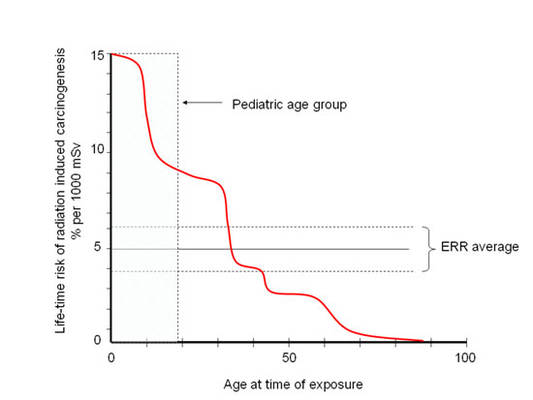
Figure 2 Adapted from ICRP Publication 60 (1990)
These data also demonstrate that you cannot simply use the boilerplate relative take a chance shown in Table ii to estimate the increased incidence of cancer due to radiations exposure. In guild to do this assay correctly you need take into consideration the age of all individuals in the group that is irradiated.
A.iii. Special Considerations for Embryo/Fetus
The early on evolution of life is a time when rapid cell division and differentiation are occurring. Therefore, radiations sensitivity is high for the developing embryo/fetus and protection from radiations needs to be considered differently than the general public. Table 3 provides a review of the stage and deterministic effects that may occur in the embryo/fetus following exposure to different levels of radiation. Similar to what was shown in Table ane, deterministic furnishings below an absorbed dose of 0.1 Gy are non found, even in the embryo/fetus.
Table 3: Summary of Suspected In-Utero Induced Deterministic Radiations Effects* | |||||
| Menstrual or gestational age | Conception age | <0.05 Gy | 0.05-0.i Gy | >0.1 Gy | |
| 0 - 2 weeks | Prior to conception | None | None | None | |
| 3rd and fourth weeks | 1st - 2d weeks | None | Probably none | Possible spontaneous abortion | |
| fifth - 10th weeks | 3rd - 8th weeks | None | Potential effects are scientifically uncertain and probably as well subtle to be clinically detectable | Possible malformations increasing in likelihood as dose increases | |
| 11th - 17th weeks | ninth - 15th weeks | None | Potential furnishings are scientifically uncertain and probably too subtle to be clinically detectable | Increased risk mental retardation or deficits in IQ that increment in frequency and severity with increasing dose | |
| 18th - 27th weeks | 16th - 25th weeks | None | None | IQ deficits not detectable at diagnostic doses | |
| >27 weeks | >25 weeks | None | None | None applicable to diagnostic medicine | |
| *Taken from "ACR Exercise Guideline for Imaging Pregnant or Potentially Pregnant Adolescents and Women with Ionizing Radiation", derived from ICRP Publications 84 (2001) and 90 (2004). | |||||
Although deterministic effects are not seen at depression dose levels in the embryo/fetus, there have been many studies that have shown an increased incidence of cancer (i.e. stochastic effects) in children following in-utero exposure to radiation. Pre-natal radiations exposures resulted in an increased cancer charge per unit in the offspring of the survivors of the diminutive bombings in Hiroshima and Nagasaki. In other epidemiological studies, there have also been skilful statistical results that demonstrate an increased cancer rate in children following pre-natal radiation exposure from diagnostic radiology studies. Unfortunately, these epidemiological studies do not provide very skilful data on the specific absorbed dose received to the fetus or embryo. This limits the power to accurately narrate the dose vs. response as has been done for deterministic furnishings. But since the doses received in these epidemiology studies were in the diagnostic radiology range, they propose that depression levels of radiation exposure to the embryo/fetus definitely increase the risk of babyhood cancer.
B. DOSE METRICS
In the context of dose quantities relevant to the topic of radiations risk, two types of quantities are of importance: dose limits and reference levels. Dose limits refer to the maximum level of dose that the general public can receive from a source other than natural background radiation levels and those received past occupational workers in their task. The reference levels reflect the typical dose values expected in the bulk of imaging studies. Both quantities can be described in terms of a number of dose-related metrics, including absorbed dose, effective dose, exposure, or whatsoever modality-specific dose index (due east.m., CTDI for CT imaging).
B.i. Dose Limits
Limits for exposure to radiation should be at a level beneath the threshold where deterministic effects occur, i.east. beneath 0.i Gy. Furthermore, the limit should exclude exposures from background radiation. Because radiation is around usa all of the time from the sun and naturally occurring sources, information technology would not brand sense to try to limit radiations exposure below natural background levels.
Every bit the primary business is stochastic effects, the constructive dose with units of Sieverts or 1/m of a Sievert (i.east. mSv) is most commonly used. Using the threshold dose as a starting point, dose limits are determined using the Principles of Justification and Optimization.
- Principle of Justification: any decision that alters the radiations exposure to an individual or population should take an outcome that does more than adept than harm. This means that any radiations source should provide a benefit with its use, either to the individual or to society at large, and the chance of any detrimental effects must be small-scale relative to this do good.
- Principle of Optimization: the application of radiation in whatsoever situation should be developed to minimize the hazard of exposure while maximizing the do good. Overly conservative reduction of radiation exposure from medical procedures may limit the diagnostic quality of the procedure resulting in a reduction in the patient'southward overall medical outcome. When the medical benefit is retained or maximized, the risk should be as depression every bit possible. The Principle of Optimization is coordinating to the As Low As Reasonably Doable (ALARA) concept.
It is of import to empathise that dose limits are not levels of exposure that should be considered acceptable in an occupation or that can be safely received by the full general public. They are rather maximum limits consistent with the current state of medical practice. In full general, the concept of ALARA should still be used when developing radiations protection procedures/policies, and dose limits should be thought of as the maximum exposure that should be allowed in any situation. In nearly states, the ALARA concept requires investigation into dose-reduction methods even if but a fraction of the limit is received by any private.
B.2. Reference Levels
The adventure and benefit from medical exposures are received by the same individual. Since the individual's situation, body habitus, and medical needs are unique, dose limits do non make sense for medical exposures. Yet an average radiation exposure level received from a diagnostic or interventional procedure can be used to evaluate whether the dose being used for a procedure is within an acceptable range based on existing practice norms. These exposure levels are chosen reference levels and they are exam-specific.
Reference levels for medical exposures are unremarkably set for an average-size patient at the upper levels (75th percentile) seen in normal practice. The typical operational dose for the majority of exams is expected to be below these values. To make meaningful comparisons, aggregate facility data from boilerplate size patients should be compared against criterion DRLs. If the DRL is exceeded, the protocol should be reviewed to make up one's mind methods to reduce the exposure for that exam type at the institution.
Table 4: Diagnostic Examination Reference Levels | |
| Examination | Diagnostic Reference level |
| Radiography | |
| Developed PA chest (23 cm), with filigree | 0.15 mGy |
| Pediatric PA chest (12.5 cm), without grid | 0.06 mGy |
| Pediatric PA chest (12.5 cm), with grid | 0.12 mGy |
| Adult AP abdomen (22 cm) | 3.4 mGy |
| Adult AP lumbosacral spine (22 cm) | 4.two mGy |
| Fluoroscopy | |
| Adult upper GI, without oral contrast media, with grid | 54 mGy/min |
| Developed upper GI, with oral contrast media, with grid | fourscore mGy/min |
| Developed moving picture fluorographic PA abdomen, without dissimilarity, with filigree | three.ix mGy |
| Developed digital fluorographic PA abdomen, without dissimilarity, with grid | 1.5 mGy |
| Adult film fluorographic PA abdomen, with contrast, with grid | 27.5 mGy |
| Adult digital fluorographic PA abdomen, with dissimilarity, with grid | ix.9 mGy |
| Computed Tomography | |
| Adult caput (16 cm lat), 16 cm CTDI phantom | 75 mGy CTDIvol |
| Developed abdomen-pelvis (38 cm lat), 32 cm CTDI phantom | 25 mGy CTDIvol |
| Adult chest (35 cm lat), 32 cm CTDI phantom | 21 mGy CTDIvol |
| Pediatric (historic period 5) head (15 cm lat), sixteen cm CTDI phantom | xl mGy CTDIvol |
| Pediatric (age 5) abdomen-pelvis (20 cm lat), 16 cm CTDI phantom | 20 mGy CTDIvol |
| * Taken from ACR-AAPM Practise Guideline Parameter for Diagnostic Reference Levels and Achievable Doses in Medical Ten-Ray Imaging - Revised 2013 (Res. 47) | |
There are a number of sources for reference level values. Some of these can exist establish in the Department on Information Sources and Recommended References and Citations. The American College of Radiology (ACR) Appropriateness Criteria® has developed a comparative scale for the Relative Radiation Level (RRL) values based on constructive dose (Table 5), which may be used toward reference levels or elementary comparison of exams.
Table v: Relative Radiation Level Scale | ||
| Relative Radiations Level | Effective dose range | Pediatric Effective Dose Gauge Range |
| O | 0 | 0 |
 | Less than 0.1 mSv | Less than 0.03 mSv |
| | 0.1 – 1.0 mSv | 0.03 – 0.3 mSv |
| | 1.0 – 10 mSv | 0.three – 3.0 mSv |
| | 10 – xxx mSv | 3.0 – 10 mSv |
| | 30 – 100 mSv | x – 30 mSv |
| * Adapted from ACR Appropriateness Criteria®, Radiations Dose Assessment Introduction 2016 | ||
Tables 6 – ix give a sample of the Relative Radiations Level and the range of constructive dose values reported for specific diagnostic and interventional radiology examinations. These values are for an average adult patient using typical equipment and techniques. The average effective dose in all of these exams is below 100 mSv (i.e., 0.1 Sv). Therefore, deterministic effects should not be seen for an average patient/examination receiving diagnostic radiology exams. But the potential for stochastic effects must always be considered when an examination is planned.
Table vi: Average Effective Dose in Diagnostic Radiology* | ||
| Examination | Relative Radiations Level | Range of values (mSv) |
| Extremity | | 0.0002 - 0.i |
| Breast X-ray PA / LAT | | 0.007 - 0.24 |
| Mammography | | 0.ane – 0.6 |
| Abdomen / Pelvis | | 0.04 - 1.2 |
| Thoracic / Lumbar Spine | | 0.5 – one.8 |
| IVU | | 0.7 – three.7 |
| Upper GI westward/fluoroscopy | | ane.5 - 12 |
| Barium enema w/fluoroscopy | | 2 - 18 |
| *adjusted from Mettler FA, et.al. Radiology Vol 248 (1) p254-263 2008 | ||
Table 7: Average Effective Dose in CT* | ||
| Test | Relative Radiation Level | Range of values (mSv) |
| Caput | | 0.9 – 4 |
| Chest (standard) | | 4 – 18 |
| Chest (high resolution, e.grand., pulmonary embolism) | | 13 – twoscore |
| Abdomen | | three.5 – 25 |
| Pelvis | | 3.3 – x |
| Coronary Angiogram | | 5 – 32 |
| Virtual Colonoscopy | | iv – 13 |
| Calcium Scoring | | i - 12 |
| *adjusted from Mettler FA, et.al. Radiology Vol 248 (1) p254-263 2008 | ||
Table 8: Boilerplate Effective Dose in Interventional Radiology* | ||
| Exam | Relative Radiations Level | Range of values (mSv) |
| Head/Neck angiography | | 0.8 – 19.half-dozen |
| Coronary angiography (diagnostic) | | 2 – xv.viii |
| Coronary angioplasty, stent placement, RF ablation | | vi.9 – 57 |
| TIPPS | | 20 – 180 |
| *adapted from Mettler FA, et.al. Radiology Vol 248 (one) p254-263 2008 | ||
Tabular array 9: Boilerplate Constructive Dose in Nuclear Medicine* | ||
| Examination | Relative Radiation Level | Effective dose/ administered activity (mSv/MBq) |
| Brain (Tc99m) | | 0.0093 – 0.0077 |
| Encephalon PET (18F-FDG) | | 0.019 |
| Thyroid scan (123I) | | 0.075 (w/15% uptake) |
| Thyroid browse (Tc99m) | | 0.013 |
| Cardiac Stress Test (depending on isotope/protocol) | | 0.0085 – 0.22 |
| Cardiac PET (eighteenF-FDG) | | 0.019 |
| Lung Perfusion (Tc99m) | | 0.011 |
| GI Drain | | 0.007 |
| Renal (depending on isotope/protocol) | | 0.0049 – 0.0088 |
| Bone | | 0.0057 |
| *adjusted from Mettler FA, et.al. Radiology Vol 248 (1) p254-263 2008 | ||
C. BALANCING Benefit AND Run a risk
With an understanding of the effects of radiation and the doses for standard examinations, a physician (mayhap with the assist of a radiologist) tin brand a decision of which examination provides the near benefit to the patient at the everyman possible dose. To do this, the physician needs consider the following criteria:
- Patient's clinical conditions - What are the benefits of using radiation?
- Availability of equipment - New and changing radiations equipment technology makes the availability of some procedures limited.
- Availability of personnel - Personnel must take the appropriate training on the equipment to perform the procedure desired.
- Alternative exams - All other non-ionizing radiation options (e.g. ultrasound, MRI, EEG, EKG, etc.) for the specific situation cannot provide the desired outcome.
The radiologist and the referring physician ultimately brand the choice on which examination to perform, taking into consideration all information known for the specific patient's situation and the imaging options. In full general, the use of non-radiations tests should be considered before using radiation, and less invasive procedures should exist considered before more than invasive techniques are chosen.
The ACR has organized several expert panels to develop criteria for determining appropriate imaging examinations for specific medical conditions. The ACR Appropriateness Criteria® are based on the complication and severity of a patient's clinical condition and include those exams that are generally used for evaluation of these atmospheric condition. All exams that take potential to be used in the specific situation are then ranked based on the appropriateness criteria, taking into account the procedures' risks vs. do good as defined by the panel of experts. For example, Table 10 shows the Appropriateness Criteria for diagnosing abdominal pain and fever in an developed patient. Table eleven shows an alternate set of criteria if the patient is pregnant.
Tabular array 10: Acute (Nonlocalized) Intestinal Pain and Fever or Suspected Abdominal Abscess | ||
| Test | Rating one = least advisable 9 = most appropriate | RRL calibration |
| CT belly and pelvis w/contrast | viii | |
| CT belly and pelvis westward/o contrast | 7 | |
| Usa belly | six | 0 |
| MRI abdomen and pelvis w/o contrast and w/contrast | vi | 0 |
| X-ray abdomen | five | |
| MRI abdomen and pelvis w/o contrast | five | 0 |
| X-ray contrast enema | four | |
| Nuclear Imaging Ga-67 of abdomen | 4 | |
| X-ray upper GI series with small bowel follow-through | 4 | |
| CT abdomen and pelvis w/o contrast and w/contrast | 3 | |
| Nuclear Imaging Tc99m WBC abdomen and pelvis | iii | |
| Nuclear Imaging In-111 WBC abdomen and pelvis | 3 | |
| *adapted from ACR Appropriateness Criteria October 2012. | ||
Table 11: Acute (Nonlocalized) Intestinal Pain and Fever or Suspected Abdominal Abscess | ||
| Exam | Rating 1 = least appropriate ix = nigh appropriate | RRL scale |
| US abdomen | viii | 0 |
| MRI abdomen and pelvis w/o dissimilarity | vii | 0 |
| CT abdomen and pelvis w/contrast** | 5 | |
| CT abdomen and pelvis w/o contrast | 5 | |
| X-ray belly | four | |
| CT abdomen and pelvis w/o contrast and westward/dissimilarity | 2 | |
| MRI abdomen and pelvis w/o contrast and w/contrast | 2 | 0 |
| X-ray upper GI series with small bowel follow-through | 2 | |
| 10-ray contrast enema | ii | |
| Nuclear Imaging Ga-67 of abdomen | 2 | |
| Nuclear Imaging Tc99m WBC abdomen and pelvis | 2 | |
| Nuclear Imaging In-111 WBC belly and pelvis | 2 | |
| *adapted from ACR Appropriateness Criteria October 2012. ** only afterward other studies without ionizing radiation have been used. | ||
The ACR Ceremoniousness Criteria® are for generic patient situations and do not accept into business relationship secondary conditions the patient may have. For instance, it is known that some inherited syndromes (e.thousand. Down's syndrome, Fanconi'south anemia, Ataxia-telangiectasia) event in increased sensitivity to radiation. In addition, these criteria assume all equipment options are available at the site.
To get a meliorate understanding of the examination that is being ordered, the ACR and the Radiological Society of N America (RSNA) have established the RadiologyInfo.org website to inform and educate the public about radiologic procedures. This site explains how various X-ray, CT, MRI, ultrasound, radiation therapy, and other procedures are performed. It besides addresses what the patient may experience and how to prepare for the exams. The website contains over 100 radiologic procedures and is updated frequently with new information.
Improved sensation and recommendations for imaging pediatric patients has also been initiated by the Prototype Gently Brotherhood. This initiative is chosen the Image Gently campaign. The goal of this entrada is to raise the awareness of radiation dose in imaging children and to suggest methods/processes to provide acceptable images at the everyman doses.
D. PERCEPTION OF RISK
There is risk in all aspects of life and the best that can be hoped for is to minimize the risks that accept the greatest potential for disrupting 1's life. When a run a risk has a benefit to an individual or to club the risk may be justified with respect to the benefit. Only how tin can both the risks and the benefits be explained? This requires cognition of how people perceive risk and how to communicate the take a chance and the benefit to unlike populations.
D.1. How to Convey Technical Information to the Public
Medical environments are full of technical jargon that the public and fifty-fifty some personnel inside different medical professions cannot understand or interpret correctly. Technical information must be conveyed in unproblematic, clear terms. In addition, care must be taken to emphasize important ideas and then that they exercise non go lost in the discussion. In general the following principles should be used when trying to convey technical information to the public:
- Avoid using technical/medical jargon
- Translate technical/medical terms (e.k., dose) into everyday language
- Write short sentences that convey a single point
- Utilize headings and other formatting techniques to provide a clear and organized structure to the presentation of data
D.ii. Risk Advice vs. Adventure Teaching
Risk communication differs from risk teaching. When attempting to talk over risk, experts need to understand the value systems of the people they are addressing. This requires an understanding of how different groups may interpret hazard.
Private risk vs population gamble
Risk magnitudes and estimates, radiation related or otherwise, are developed based on population statistics. When communicating chance to a patient, we are ascribing the population-base likelihood of harm to an private, not a population. Only in doing so, the risk is not an actual "individual" risk, rather the likelihood of harm to a theoretical population that shares the aforementioned attributes as that of the patient, and that one theoretical private (not necessarily the patient) in that population might be harmed. In this manner, chance is fundamentally a stochastic construct. Without understanding this statistical nature of risk estimates, people tend to utilise a deterministic interpretation of risk. This often tin crusade a false understanding of what the risk actually is, especially when compared to other activities or procedures.
Take chances ranking
Differences betwixt how scientists and non-scientists rank adventure is ane of the major issues of risk communication. In full general, if scientists and not-scientists are asked to rank a series of health risks the rank orders of the lists are considerably different. This is demonstrated in Table 12 where iii different groups were asked to rank 30 activities/sources of risk from the well-nigh risky (ranked as 1) to the to the lowest degree risky (ranked at 30). The acme ten risky activities are highlighted. At best, there is a correlation coefficient of 0.six between the scientific community (i.e. professional person social club members) and the other groups. At the time this study was conducted, ten-ray exposure was ranked 24th by the experts and 17th or 22nd by the other groups. It is articulate that different groups will assess risk differently; therefore, we, as the experts, need to sympathise and accost these differences in gild to communicate risks and benefits effectively.
Table 12: Perception of Take a chance* | |||
| Action (ranked past experts) | League of Women Voters | College students | Professional gild members |
| Motor Vehicles | 2 | 5 | 3 |
| Smoking | 4 | 3 | 4 |
| Booze | vi | 7 | v |
| Handguns | 3 | 2 | 1 |
| Surgery | 10 | 11 | nine |
| Motorcycles | five | 6 | 2 |
| X-rays | 22 | 17 | 24 |
| Pesticides | 9 | iv | 15 |
| Electric Ability | xviii | 19 | nineteen |
| Swimming | 19 | xxx | 17 |
| Contraceptives | 20 | 9 | 22 |
| Private Aviation | seven | 15 | 11 |
| Large Construction | 12 | 14 | 13 |
| Food Preservatives | 25 | 12 | 28 |
| Bicycles | 16 | 24 | 14 |
| Commercial Aviation | 17 | 16 | 18 |
| Constabulary Work | 8 | eight | 7 |
| Fire Fighting | 11 | x | 6 |
| Railroads | 24 | 23 | 29 |
| Nuclear Ability | 1 | 1 | 8 |
| Food Coloring | 26 | xx | xxx |
| Home Appliances | 29 | 27 | 27 |
| Hunting | 13 | xviii | 10 |
| Antibiotics | 28 | 21 | 26 |
| Vaccinations | 30 | 29 | 29 |
| Spray Cans | 14 | xiii | 23 |
| Football game | 23 | 26 | 21 |
| Power mowers | 27 | 28 | 25 |
| Mountain Climbing | fifteen | 22 | 12 |
| Skiing | 21 | 25 | 16 |
| *adjusted from Slovis P, Science Vol. 236 No. 4799 (1987) | |||
Objective Risks Vs. Subjective Risks
There are two basic translations of how risk is interpreted. These are objective in construction, such equally how the scientific community normally interprets risk, and subjective in nature, which is often used past the general public. Objective assessment of risk is what we accept done in this document and is based upon peer-reviewed scientific analysis of risks. Withal, the general public may be getting their adventure assessment information from less technical sources such as non-peer-reviewed publications and journals (newspapers, magazines, etc.), not-peer-reviewed internet sites (due east.m. Wikipedia), non-documentary-based telly shows (due east.g. Gray'due south Anatomy, ER), and personal communication in social settings (east.1000. word with friends). In addition, dissimilar scientific analysis, the public is unlikely to recall where a fact was presented to them; for instance, they may not be able to recall whether the National Enquirer or the proceedings of the National Academy of Sciences presented the fact. Every bit a upshot, equal weight may be given to data presented past any source.
The almost important point the physician needs to understand is that even though they may know the objective risk of an examination or process, they need to be aware of the patients' probable subjective hazard assessment during and adjust their conversation appropriately. The methods to do this are educational and motivational rather than scientific.
Furthermore, in medical situations, the patient and their family or friends are often confused and under loftier stress. In these situations, several things need to exist considered:
- People ofttimes have difficulty processing information and do not "hear" what is existence said to them
- People often become distrustful of anything a person is saying, and therefore do not listen to what is being said
- People oft requite greater weight to negative data than to positive information
In risk perception theory, perception equals reality. This means in that location may exist no correlation between public perceptions of take a chance and scientific or technical data. Therefore, discussions of risk should include a sensibility of the likely perception too equally the actual gamble. In order to accomplish this, Table xiii offers several central "Practise'due south and Don'ts" for communicating adventure.
Tabular array 13: Checklist on Dos and Don'ts When Communicating Risks* | ||
| Category | Dos | Don'ts |
| Truthfulness | Tell the truth | Practise non prevarication or avert the truth |
| Absolutes | Avert absolutes --nothing is absolute | Exercise not use the terms "never" or "always" |
| Jargon | Ascertain all terms and acronyms | Do not utilize standard medical terminology |
| Negative | Use positive or neutral terms | Do not use negative terms or negative associations |
| Temper | Remain calm | Do not let your feelings interfere with your power to communicate |
| Clarity | Enquire whether y'all are being understood | Exercise not presume agreement |
| Abstraction | Use examples, metaphors, and analogies to assistance agreement | Do not talk of theoretical concepts without using articulate non-technical justification |
| Attack | Only attack the issue | Do not assail the person or organisation that may have fabricated incorrect statements |
| Hope | Promise but what you are sure will occur | Do not make promises that you lot cannot back upwards and follow through on to ensure they occur |
| Speculation | Provide information only on what is being done and what you know | Exercise not discuss worst-example scenarios and unintended possible outcomes, unless required by protocol |
| Run a risk/benefit comparing | Make take a chance and do good statements separately | Do not discuss the risk relative to the benefit |
| Chance comparisons | Use tested comparison messages, cite trustworthy data/groups | Do not compare unrelated risks |
| *adapted from EPA Workbook on Take chances Communication in Action (2007) | ||
D.4. Risk Comparison
The best practices when making hazard comparisons is to utilise the following criteria:
- Make comparison of the same risk at two different times or circumstances
- Make comparing with a standard that is understood past the listener
- Brand comparison with different estimates of the aforementioned take a chance
Oftentimes y'all will read risks compared for unrelated situations. For instance, in Table 14 the odds of dying from accidental death are shown. Note the lifetime odds of dying from an injury for a person born in 2005 were 1 in 22 (i.e. four.v%). This suggests the odds of dying from accidental causes are like to getting cancer at a later time from an exposure of ane Sv (see Table ii). The latency is a gene that weights heavily on the adventure perception and every bit such, equal hazard factors of different timescale cannot be direct compared. Furthermore, an adventitious injury cannot be related to a decision about a medical procedure where the gamble of not performing it would have its ain associated risk. Herein lies 1 of the main challenges in communicating adventure associated with medical exposures. The exposure involves a finite stochastic take a chance with a very long latency menstruation but not doing the procedure would accept another hazard with possibly a much shorter time horizon.
Table 14: Odds of Decease From Injury* (Poor comparing for radiation risk) | ||
| Type of incident / Style of injury | Number of deaths in 2005 | Probability of occurrence |
| All causes of bloodshed from injuries | 176,406 | 4.5% |
| Ship accidents | 48,441 | 1.iii% |
| Automobile | 14,584 | 0.four% |
| Pedestrian | half dozen,074 | 0.ii% |
| Air travel | 590 | 0.02% |
| Non-transportation accidents | 69,368 | one.viii% |
| Falls | xix,656 | 0.5% |
| Being struck by objects | 2,845 | 0.07% |
| Intentional self-harm | 32,637 | 0.9% |
| Assail | eighteen,124 | 0.v% |
| Complications from medical intendance | two,653 | 0.07% |
| *adjusted from National Safety Council, http://www.nsc.org/enquiry/odds.aspx | ||
If the issue is primarily communicating the hazard of medical radiation alone, a good approach would be to give the hazard of exposure to radiation in a radiology exam as an equivalent amount of exposure to the natural groundwork radiation. This is shown in Table 15.
Table fifteen: Comparison of Adult Examination Dose to Groundwork Radiation Level | |
| Exam | Reference level (fourth dimension to receive equivalent background radiation) |
| Breast Ten-ray PA / LAT | 2.4 days / 12 days |
| Mammography | ane ½ months |
| Abdomen / Pelvis X-ray | 3 months |
| Head CT | 8 months |
| Lung Perfusion (Tc99m) | viii months |
| Thyroid scan (Tc99m) | 1 ½ years |
| Encephalon (Tc99m) | 2 years |
| Abdominal CT | ii ½ years |
| Cardiac Stress Examination (depending on isotope/protocol) | 3 years – 13 ½ years |
| Cardiac PET (xviiiF-FDG) | 5 years |
| High resolution Chest CT (due east.g. pulmonary embolism, angiogram) | 5 years |
| * Using an average background radiation level of three mSv/yr and Tables 8-11 | |
Other comparisons that might be acceptable would be with the estimated risk from cancer consecration from naturally occurring or human being-induced carcinogens, i.due east. radon, arsenic, smoking, etc.
Due east. BENEFITS VS. Gamble OF NOT USING Radiation
It would exist difficult to accost all the benefits that are associated with the utilization of radiation in our everyday lives, including its use in medicine. Suffice it to say that radiation is extremely benign in many aspects of life when used accordingly. With respect to the use of radiation for diagnosis, assistance in medical interventional procedures, and therapy, the benefits need to exist weighed relative to the potential risks. As we have discussed the gamble of radiation induced effects are not well understood at the levels of radiations used for diagnostic and interventional procedures. But in that location are clearly risks associated with non performing an test that should also exist considered.
The risks to consider of NOT performing an exam include missing a diagnosis and/or initiating treatment too tardily to better the medical effect. The potential to reduce a patient's overall life expectancy due to a illness must also be considered in conjunction with the latency flow for radiation-induced cancer and the age of the patient.
F. Data SOURCES
There are many organizations and advisory groups that monitor and assess radiations utilize and the risks associated with this use. These sources should be considered when developing teaching fabric or when determining whether radiation data being presented is valid. A brief description of each of these organizations based on their mission statement is given beneath.
American Association of Physicists in Medicine (AAPM)
Association involved in the advancement of the practice of physics in medicine and biology by encouraging innovative research and development, disseminating scientific and technical information, fostering the teaching and professional development of medical physicists, and promoting the highest quality medical services for patients.
American College of Radiology (ACR)
A professional person lodge involved in maximizing the value of radiology, radiation oncology, interventional radiology, nuclear medicine, and medical physics by advancing the science of radiology, improving the quality of patient care, positively influencing the socio-economic science of the practice of radiology, providing continuing education for radiology and allied health professions, and conducting research for the future of radiology.
Conference of Radiations Control Program Directors (CRCPD)
A not-profit professional person organisation defended to radiation protection and the consistent promotion of methods to resolve radiation protection issues, to encourage high standards of quality in radiations protection programs, and to provide leadership in radiation safety and instruction.
International Commission on Radiation Protection (ICRP)
An independent registered charity established to accelerate for the public do good the scientific discipline of radiological protection, in item by providing recommendations and guidance on all aspects of protection against ionizing radiation.
National Quango on Radiations Protection and Measurements (NCRP)
Chartered by the U.Due south. Congress to collect, analyze, develop, and disseminate in the public interest information and recommendations about protection confronting radiation and radiations measurements, quantities and units, peculiarly those concerned with radiation protection.
National Research Quango (NRC) of The National Academies of Sciences (NAS)
A private, nonprofit establishment that provides scientific discipline, applied science, and wellness policy advice to governments.
See Biological Effects of Ionizing Radiation Reports (eastward.g. BEIR VII Phase 2).
Nationwide Evaluation of X-ray Trends (NEXT)
Joint try of the FDA Centre for Devices and Radiological Health (CDRH) and the Conference of Radiation Control Programme Directors (CRCPD) to characterize the radiation doses patients receive and to document the country of the exercise of diagnostic radiology.
Radiological Society of North America (RSNA)
A professional society involved in promoting and developing the highest standards of radiology and related sciences through education and inquiry. The Order seeks to provide radiologists and allied health scientists with educational programs and materials of the highest quality, and to constantly improve the content and value of these educational activities.
Run into www.radiologyinfo.org website designed for the general public to answer questions related to the many radiologic procedures and therapies.
Society of Pediatric Radiology
The Image Gently Alliance, i.east. Image Gently campaign
Alliance of organizations and people with a goal to alter the practice of imaging children through increasing awareness of the opportunities to lower radiations dose in imaging. The Alliance began as a Committee inside the Gild for Pediatric Radiology.
United Nations Scientific Commission on the Effects of Diminutive Radiation (UNSCEAR)
Established by the General Assembly of the United Nations to assess and written report levels and furnishings of exposure to ionizing radiation.
Eye for Devices and Radiological Wellness (CDRH)
Component of the U.S. Food and Drug Administration (FDA) that provides independent, professional expertise and technical assistance on the development, safe and effectiveness, and regulation of medical devices and electronic products that produce radiation.
U.S. Surveillance, Epidemiology and End Results Program (SEER)
An adjunct to the National Cancer Institute that is a source for cancer statistics in the United States.
Grand. RECOMMENDED REFERENCES AND CITATIONS
- ACR-SPR Practice Guideline Parameter for Imaging Pregnant of Potentially Pregnant Adolescents and Women with Ionizing Radiation
https://www.acr.org/-/media/ACR/Files/Practice-Parameters/Meaning-Pts.pdf. - ACR-AAPM-SPR Practice Parameter for Diagnostic Reference Levels and Achievable Doses in Medical X-Ray Imaging https://world wide web.acr.org/-/media/ACR/Files/Practice-Parameters/Diag-Ref-Levels.pdf.
- ACR Ceremoniousness Criteria® Radiation Dose Assessment Introduction (2016) https://www.acr.org/-/media/ACR/Files/Appropriateness-Criteria/RadiationDoseAssessmentIntro.pdf.
- Broadbent MV, Hubbard LB. Science and perception of radiation risk. Radiographics 1992; 12: 381-392.
- Gail MH. Models of absolute run a risk, utilize, interpretation and validation, Affiliate xi, Cancer Chemoprevention, Book ii: Strategies for Cancer Chemoprevention, edited by Kelloff GJ, Militarist ET, Sigman CC, Humana Press, Totowa, NJ, 2005.
- Hall EJ, Garcia AJ, Radiobiology for the Radiologist, sixth Ed, Lippincott Publishing, 2006.
- Hendee WR, Personal and public perceptions of radiation risk. Radiographics 1991; 11: 1109-1119.
- ICRP 103 Recommendations of the ICRP, Vol 37 (2-4), 2007.
- ICRP 60 Recommendations of the ICRP, Vol 21 (1-3), 1991.
- ICRP 84 Pregnancy and Medical Radiation, Vol 30 (one), 2001.
- ICRP 90 Biological Effects After Prenatal Irradiation (Embryo and Fetus), Vol 33 (1-2), 2003.
- ICRP 99 Low-Dose Extrapolation of Radiation-Related Cancer Risk, Vol 35 (4), 2005.
- ICRP 105 Radiological Protection in Medicine, Vol 37 (6), 2007.
- ISO 14971: 2007. Medical devices—Risk management—Awarding of hazard direction to medical devices.
- Kaste SC. Imaging challenges: a US perspective on controlling exposure to ionizing radiation in children with cancer. Pediatric Radiology 2009; 39 Suppl 1: S74-S79.
- Kleinerman RA. https://www.ncbi.nlm.nih.gov/pmc/manufactures/PMC2656401/, Pediatric Radiology 2009; 39 Suppl i: S27-S31.
- Kuhn JP, Slovis TL, Haller JO. Caffey's Pediatric Diagnostic Imaging, 10th Ed, Mosby Publishing, 2003
- Kuperman VY. General properties of different models used to predict normal tissue complications due to radiation. Med Phy 2008; 35(11): 4831-4836.
- Linet MS, Kim KP, Rajaraman P. Children's exposure to diagnostic medical radiation and cancer risk: epidemiologic and dosimetric considerations. Pediatric Radiology 2009; 39 Suppl 1: S4-S26.
- Trivial MP, Muirhead CR. Absence of testify for threshold departures from linear-quadratic curvature in the Japanese A-flop cancer incidence and bloodshed information. Int J Low Radiat 2004; one: 242-255.
- Footling MP, Muirhead CR. Curvature in the cancer mortality dose response in Japanese atomic flop survivors: absence of evidence of threshold. Int J Radiat Biol 1998; 74: 471-480.
- Little MP, Muirhead CR, Show for curvilinearity in the cancer incidence dose-response in the Japanese diminutive flop survivors. Int J Radiat Biol 1996; seventy: 83-94.
- Lilliputian MP, Muirhead CR, Charles MW. Describing time and historic period variations in the adventure of radiation–induced solid tumour incidence in the Japanese atomic bomb survivors using generalized relative and absolute models. Statistics in Medicine 1999; 18(1): 17-33.
- Mettler FA, Huda Due west, Yoshizumi TT, Mahesh M. Constructive dose in radiology and diagnostic nuclear medicine. Radiology 2008; 248(1): 254-263.
- NCRP Report 116 Limitation of Exposure to Ionizing Radiation, National Quango on Radiation Protection and Measurements, Bethesda, MD, 1993
- National Enquiry Council, Health Risks from Exposure to low levels of Ionizing Radiation, BEIR VII Phase 2. National Academies Press 2006.
- Patel SJ, Reede DL, Katz DS, et al. Imaging the pregnant patient for non-obstetric conditions: Algorithms for radiations dose considerations. Radiographics 2007; 27(half-dozen): 1705-1722.
- Paterson A, Frush DP. Dose reduction in paediatric MDCT: general principles. Clinical Radiology 2007; 62(six): 507-517.
- Pierce DA, Preston DL. Radiations-related cancer risks at low doses amidst atomic bomb survivors. Radiat Res 2000; 154(ii), 178-186.
- Reckelhoff-Dangel C, Peterson D. EPA Risk Communication in Action, The Risk Communication Workbook. Part of Research and Development EPA/525/R-05/003, 2007
- Slovis P. Perception of risk. Science 1987; 236 (4799): 280-285.
- Vaeth M, Pierce DA. Calculating Excess Lifetime Risk in Relative Gamble Models. Environmental Health Perspectives 1990; 87: 83-94.
- Verdun FR, Bochud F, Gudinchet F, et al. Quality initiatives radiation chance: What you should know to tell your patient. Radiographics 2008. 28(7); 1807-1816.

Source: https://www.imagewisely.org/Imaging-Modalities/Computed-Tomography/How-to-Understand-and-Communicate-Radiation-Risk
Posted by: monroewhia2001.blogspot.com
0 Response to "Can A Cellphone Be Repaired After Being In Xray Room?"
Post a Comment